Friction Stir Welding Machine Ensures Defect-Free Joints for Critical Aluminium Structures
1. Introduction
Friction stir welding (FSW) machines play a pivotal role in producing defect-free joints in critical aluminium structures. By utilizing unique welding technology, these machines effectively eliminate common issues such as porosity, cracks, and weak joints. As a result, industries that rely heavily on aluminium structures, such as aerospace and automotive, can trust that their components will meet the highest-quality standards. In this article, we explore the multitude of benefits that friction stir welding machines offer and how they generate reliable, strong, and defect-free aluminium joints essential for safety and performance.
2. Importance of Defect-Free Welding
Understanding why defect-free joints are crucial can be distilled into three key points:
Safety: Defect-free joints ensure the structural integrity of components, which is vital in industries like aerospace.
Performance: Smooth, strong joints enhance the overall performance of aluminium structures in demanding environments.
Cost-Effectiveness: Reduced rework and wastage lead to lower production costs, making defect-free welding beneficial for manufacturers.
Safety Risks of Defective Joints
Defective joints can lead to catastrophic failures in critical applications, putting lives at risk and resulting in significant financial losses.
Impact on Production Efficiency
Manufacturers face increased costs arising from warranty claims and recalls due to defective products.
3. Benefits of Friction Stir Welding Machines
Friction stir welding machines offer several benefits, including:
High Strength-to-Weight Ratio: Welds produced are often stronger than the base materials.
Minimal Distortion: The FSW process generates less heat compared to traditional methods, resulting in reduced warping.
Environmentally Friendly: The process is solid-state, eliminating the need for filler materials or shielding gases.
Enhanced Weld Quality
The result is a consistently high-quality weld, which is essential in applications that demand reliability.
Versatility
Friction stir welding can be applied to various materials beyond aluminium, allowing manufacturers to expand their capabilities.
4. How Friction Stir Welding Works
The friction stir welding process involves several key steps:
Setup: The materials are placed in the machine, properly aligned to ensure accurate welding.
Tool Insertion: A rotating tool is inserted into the joint line of the aluminium components.
Heat Generation: The tool generates frictional heat as it stirs the materials together, softening them.
Joining: The tool traverses along the joint, mixing the softened metals and producing a solid-state bond.
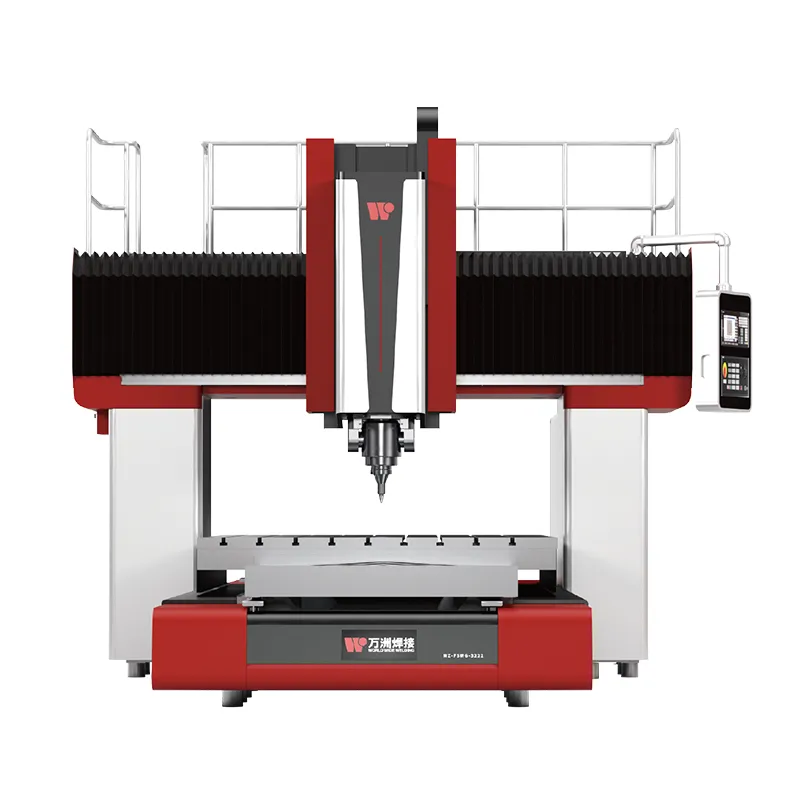
Detailed Flow Chart of the FSW Process
5. Case Studies and Examples
Several successful implementations highlight the effectiveness of friction stir welding machines in various sectors:
| Industry | Application | Results |
|---|---|---|
| Aerospace | Wing Assembly | Zero defects; improved aerodynamic performance. |
| Automotive | Chassis Manufacturing | Stronger joints than traditional welding; reduced weight. |
| Shipbuilding | Hull Assembly | Enhanced structural integrity; lower repair costs. |
Benchmarking against Traditional Welding Methods
Traditional welding techniques often struggle to produce joints that are as robust as those achieved through friction stir welding, particularly in fatigue-prone applications.
6. Conclusion
Friction stir welding machines are vital for achieving defect-free joints in critical aluminium structures. Their ability to produce high-quality welds with minimal distortion makes them a preferred choice across multiple industries. Companies like World Wide Welding are leading the way in advancing the technology, ensuring that manufacturers can consistently rely on durable and effective solutions. By investing in friction stir welding technology, manufacturers not only enhance their production efficiency but also ensure the safety and performance of their products.


评论
发表评论